How Our Rare Disease Community Doubled in 30 Days

A month ago, we set what felt like an audacious goal. We called it Project Centauri, and the mission was simple to state and hard to execute: get 100 new families onto Matrix, the online platform where our patient registry lives for Hao-Fountain syndrome.

I’m pretty darn happy to tell you that in just four weeks, our Matrix population has doubled. We now have families from 26 countries around the world and 29 U.S. states represented on the platform.

How is this happening? I’m contacting people directly. And when I say I, I mean I. If you’re out there and you’re getting an email from me, it’s because I personally wrote it and sent it to you. No bulk emailing service. No form letters. These are messages from me to you.

And you’re responding. You’re reading those emails, getting on your laptops, registering with Matrix, uploading your information. You’re making this happen.

The most important thing right now is to go even further. We’re only about 30 families away from hitting our goal of 100, and I’m confident we’ll get there. But if you’re already on Matrix, I need you to take the next step. Upload your genetic report. Give us access to your medical records.

Privacy is enormous for us, because we know it’s enormous for you. We will never share any information from your genetic testing report or your medical records unless it’s de-identified, meaning we strip out anything that could be used to figure out who you or your child are. Names, dates of birth, all of that gets removed before any researcher ever sees the data.

Maybe you’re listening because you care. You’re a well-wisher. An ardent supporter of our tribe. And maybe you want to help.

We need to expand our circle and get in front of audiences that don’t know about us yet. In our cohort, the number of people over 18 is strikingly small. There’s only a handful of adults we’ve been able to find who have Hao-Fountain syndrome. Either they have the diagnosis and simply don’t know about the Foundation for Hao-Fountain Syndrome (usp7.org) and its efforts, or maybe they don’t even have the diagnosis yet but carry a USP7 variant and need more or better genetic testing.

So if you have any access to an agency that provides services to adults with disabilities, adult genetics clinics, rare disease patient advocacy networks in countries outside the U.S., or genetics clinics anywhere in the world, we’d love to hear from you.

I just got the best email from a dad in Brazil whose daughter has Hao-Fountain. That same week, a mom in Italy sent me a picture of her daughter hanging out with friends. We have families sharing their medical records in German, Chinese, French, Portuguese, Russian, Arabic. We are everywhere. And I know there are more out there, waiting to find us and to be found.

Great things are happening. We’re going to crush Project Centauri in weeks, not months. We’re going to fill what one of our advisors called the biggest gaping hole in our work: collecting data. Without that information, we go nowhere near a cure or treatment. But with it, we have a real shot.
When I Gave My Daughter Four Times Her Seizure Medication

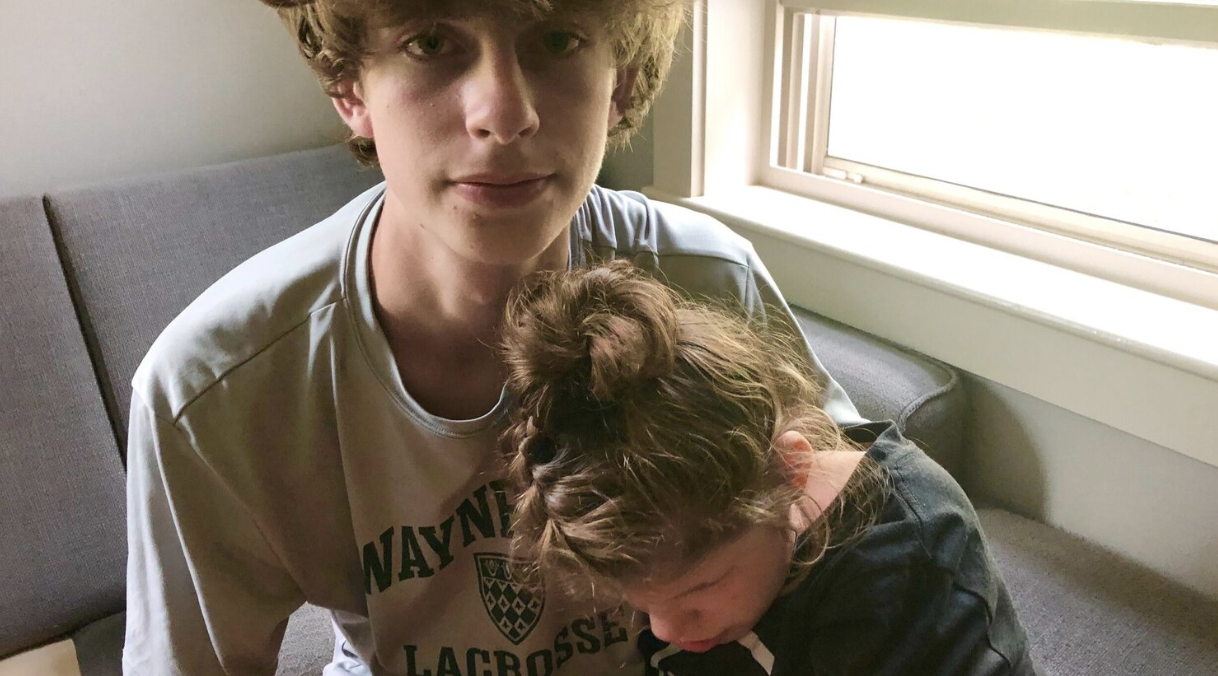
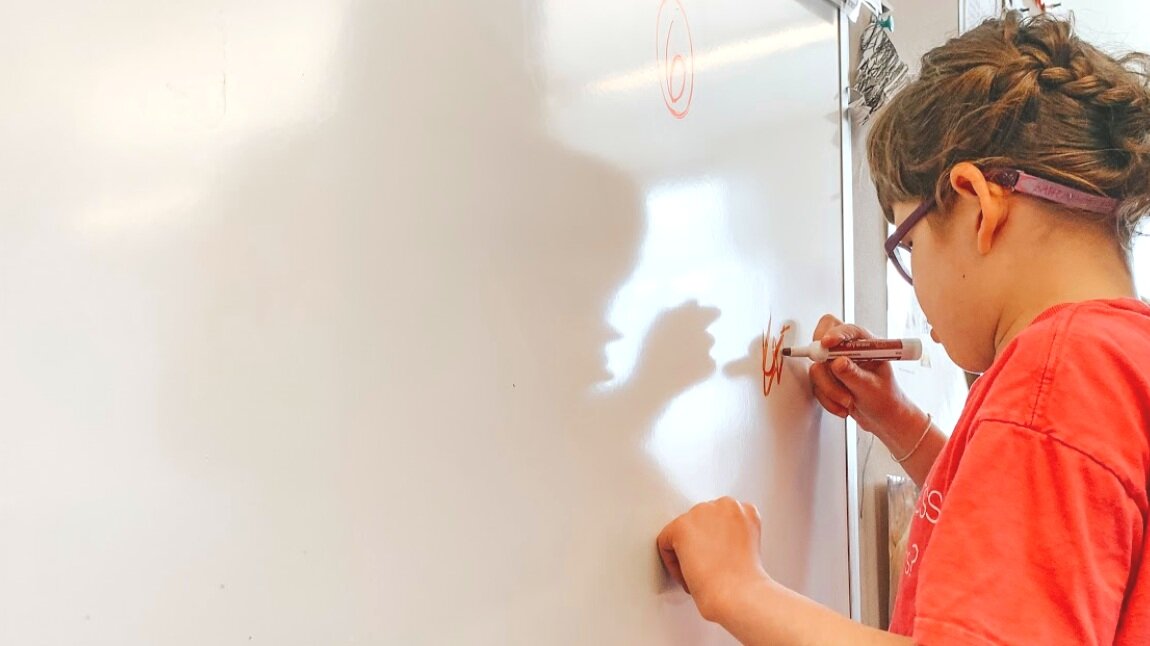
It’s Saturday morning. Tess is getting up for the day. Except that she isn’t. She’s falling over. Constantly. Can’t keep her balance, walking into walls, falling on stuff. She can’t stand up on her own, can’t even think about going up or down stairs. We can’t figure out what’s going on.

It occurs to us that her ADHD medication, guanfacine, has recently doubled. It can affect blood pressure, so we think maybe that’s the problem. We sit with her all day, trying to keep her safe and still. She’s out of it. Pretty tired, and unable to stand or walk on her own.

That night, after we’ve given her all her evening meds, my wife figures it out. It’s not the guanfacine. It’s her seizure medication, Lamictal.

My Mistake

I fill Tess’s pillbox every week. She’s been on Lamictal since her seizure on New Year’s Eve. The thing about Lamictal is that it was a 25-milligram pill. Once we worked her up to her full dose of 200 milligrams, that’s 8 pills every night, which is a lot on top of her other medications. So I’d contacted her neurologist and asked if he could prescribe a higher dose per pill so she wouldn’t have to take as many.

What I didn’t realize is that he’d already done this. The new pills were 100 milligrams each. And I had refilled her pillbox with 8 of them. For four nights in a row, she’d been getting 800 milligrams when her dose should have been 200. Four times what it should have been. Because I didn’t look at the label.

The ER

We called poison control. They told us to go directly to the emergency room, where Tess would get an EKG to check the electrical activity in her heart. We drove to the ER, got right in, and the EKG results looked alarming. I’m no cardiologist, but I knew what I was seeing didn’t look good.

They gave her IV fluids, got her comfortable in a bed, and we waited. I was positively ill, thinking about my mistake. How careless it was. How I could have given her medication without looking at the label. How awful it must have felt for Tess over those days as the quadruple overload took effect. How avoidable this was.

Tess fell asleep around 8. We were there for six or seven hours. Just before midnight, they gave her another EKG. It looked much better. She was cleared to go home. Her neurologist happened to be on call that weekend and told us to give her no Lamictal for a day, then slowly get back to her 200-milligram dose.

No Tidy Lesson

Tess is doing much better now. She can walk on her own again, back to going up and down stairs.

This is our third trip to the ER with Tess since last August. Seizure, seizure, medication overdose. Hard to believe she’s been through so much. Hard for me to think about the fact that the third time was entirely avoidable and entirely, 100 percent my fault.

I still feel terrible about it. I don’t have a tidy lesson here. No “here’s what I learned” moment. I just wanted to put this out there because I know I’m not the only caregiver who has made a medication error with their child. Research shows that every eight minutes, a child experiences a home medication error. If this has happened to you, know that you’re not alone, and the guilt is real.

The Stronger Every Day podcast is produced by Bo Bigelow, Chairman of the Foundation for Hao-Fountain Syndrome (usp7.org).

How AI Is Helping Our Rare Disease Foundation Work Toward a Cure

Ask anyone who works a difficult job what resource they wish they had. Chances are, they’ll say time.

My wife and I say this to each other constantly. How was your day? Ran out of time. Massive to-do list, never stopped moving, never stopped working, and still couldn’t get to everything. I’ve definitely felt that way about my work with the Foundation for Hao-Fountain Syndrome (usp7.org). I want to be in touch with more families. I want to get more people on Matrix, our patient registry platform, as part of our new initiative, Project Centauri. I want to do a million things more than I have time for.

So recently, I’ve been exploring what AI can do for us. And I’ve made some major headway.

The Chatbot That Didn’t Cost $30,000

For years, I’ve been asking developers to build me a chatbot. The ideal scenario: I draft a comprehensive document with answers to every question newly diagnosed families ask. Things like, what do I do first? Which doctors should I take my kid to? The chatbot would guide them through all of it without requiring a phone call or a chain of emails.

Every developer I talked to quoted $25,000 to $30,000. Then I presented the same question to an AI platform. About an hour later, I had a working chatbot. No developer needed.

It’s not quite ready for prime time yet, but early testing is promising. The chatbot is designed to shepherd newly diagnosed families through the process of joining our foundation, connecting with Dr. Christian Schaaf (the world’s expert on our gene and disease), and getting onto Matrix. And if things get complicated, it connects them to a human.

The Research Assistant I Never Had

I’ve always admired the behind-the-scenes assistant who reminds the boss about things falling through the cracks. So I told the AI about the various scientists working with us, our short-term goals, and what science we still need to nail down. Then I asked: who’s missing? Who should be on our team but isn’t?

The AI read through a pile of scientific papers and came back with names I’d never heard of. Scientists whose work would help us immensely. I’m no fool, so I didn’t start drafting emails right away. I asked to see the papers, read them myself, and found that the AI was right. These researchers would be an excellent fit. I’ve reached out to some of them and am waiting to hear back.

This function of AI as an assistant that can step back, look at things, and figure out what you’re missing is huge for a one-person operation like mine.

The Dashboard That Took Minutes, Not Weeks

Project Centauri has us tracking dozens of families at different stages: some on Matrix but without their genetic report uploaded, some with medical records but no genetic data, some not on Matrix at all. Tracking all of this manually would make your head spin.

So I had the AI build me a dashboard. I can see how many people are on Matrix, how many have completed each step, when they were invited, and what I need to do next. It’s a simple spreadsheet that would have taken me ages to build on my own. It took a few minutes.

These homemade tools, these methods of measuring our impact, of seeing what families are doing or not doing, it’s like having a bunch of new employees. Departments, really. The way we’ve always operated is that if we need a thing and it doesn’t exist, we have to make it ourselves. I’m glad that AI is making that possible without eating up entire days.

When My Daughter With a Rare Disease Watched Her First Full Movie

This is one of my favorite times of year, because it’s March Madness. College hoops has this massive tournament every March, and even when my teams are terrible and don’t qualify, I still enjoy tuning in. This year, Tess has been watching with me.

This is new. I can’t tell whether it’s because she connects it with the basketball team she’s on and recognizes that it’s the same game. But the sounds are there: the squeak of sneakers on the court, the bouncing of the ball, the roar of the crowd, the buzzer as time expires. She’s watching. And she stays with it for a long time, rather than getting restless and getting up.

The Movie Experiment

On a related note, my wife had this idea to watch Pixar’s Inside Out with Tess, to see if she’d be willing to sit and actually view it. Often we find that she’s unable or unwilling to watch our TV, since she’s on the couch and the screen is across the room, and even with her glasses we aren’t sure what she can see. That’s why she typically watches YouTube videos on a laptop, with the screen on my lap and just a foot or two in front of her.

But for Inside Out, we put it on the TV. And she watched it. She sat between my wife and me, in a soft cocoon of blankets, and watched a movie. We didn’t screen it from beginning to end in one sitting. We did it in parts, about 30 minutes at a time. But this is a first: she sat and watched all the parts of an entire feature-length film.

What It Tells Us

It’s interesting to stand back and think about all the components of a movie. The voices and sounds. The way they use music. The characters and storyline. And then there are our reactions, the way my wife and I laugh at certain scenes even though we’ve seen them before.

It’s this full constellation of sensory and cognitive experiences connected to film that I think is drawing Tess in and keeping her attention. She understands so much more than she used to. More than people give her credit for, that’s for sure.

We already have a bunch of other animated films lined up to try next with her. Each one of these small moments tells us something about what’s happening in Tess’s mind, about how she’s processing the world around her. For families raising a child with an intellectual disability, these milestones don’t always look like what the parenting books describe. But they’re no less extraordinary.

Tess has Hao-Fountain syndrome, a rare genetic condition caused by a mutation in the USP7 gene. You can learn more at the Foundation for Hao-Fountain Syndrome (usp7.org) or by listening to the Stronger Every Day podcast.

Why Every Rare Disease Family Needs to Share Their Data

We have a goal. A bold one. Ambitious, for sure.

If you’ve been following our work at the Foundation for Hao-Fountain Syndrome (usp7.org), you may recall Project Artemis. We wanted to find 100 patients. At that time we only had about 20 or 30, but we knew there were more of us out there. So we launched this mission. We called it Project Artemis because Artemis is the Greek goddess of the hunt, and that’s exactly what we were doing. Hunting for patients. And we nailed it. We got to 100. And now we’ve more than tripled our numbers, holding steady at about 315 worldwide.

This new goal, Project Centauri, is to get 100 more patients onto Matrix, our patient registry platform. Here’s why the registry matters so much.

What the Data Makes Possible

When scientists ask us where our patients are from and whether there are any geographic hotspots, we can answer with confidence. When a brilliant scientist at UConn Health asks us for specific mutations to build cellular models, we can provide real mutations from real patients. When clinicians ask what symptoms we generally see, we can share survey data showing that almost everyone has some kind of speech deficit, many have autism, and seizures are common. Here are the actual numbers.

None of this is possible without data. And the data comes from families joining Matrix and sharing their information.

Last September at our annual conference, Dr. Terry Jo Bichell spoke to our group. She’s a rare disease mom whose son has Angelman Syndrome, and she wanted so badly to find a cure that she went and got her PhD in neuroscience. She’s actually done it. She helped get the pieces in place for an experimental Angelman treatment. So she knows what it takes.

Dr. Bichell told us some hard truths. You won’t get to a cure. You won’t find a treatment. Unless you all share your data. Your genetic testing reports. Your medical records. Your information about what you all go through every day. Without that data, you’re going nowhere.

Privacy Is Built In

We de-identify everything. That means we remove any information that could be used to personally identify the patient, like name, date of birth, and similar details. What’s left is incredibly valuable. Just knowing that there’s a 7-year-old male with a certain type of genetic mutation who has seizures and autism and vision problems is enormously helpful for researchers. No one needs to know who that person is.

Why Your Specific Mutation Matters

Think of USP7 as a long loaf of bread, sliced into several regions. If your mutation is in a particular region, our theory is that your symptoms will be more severe than if you’re in other regions. So it matters where your specific mutation falls.

And it really matters for us to know what symptoms you have. If your mutation is in that particular region and you have many of the symptoms that generally make up our disease, that tends to prove our theory. But if you’re in that region with only mild symptoms, we need to know that too. Because it means our theory’s wrong and we need to go back to the drawing board.

Scientists we’re working with can build models of specific mutations and figure out what’s actually happening in your cells. Does the USP7 protein functiA rare disease dad explains why sharing genetic reports and medical records through a patient registry is the single most important thing families can do to advance research toward a cure.on normally? Does it connect with its partners in the cell the way it should? In other words, what’s going on in the bodies of people who have Hao-Fountain syndrome? Those brilliant scientists can answer those questions, but only if we give them the data.

The Ask

If you are a Hao-Fountain patient or you take care of one, please get on Matrix. And yes, filling out the surveys takes time. Dr. Bichell didn’t sugarcoat it, and I won’t either. But we’ve got to have them. Every new family that joins gives us a better shot at moving toward a cure or treatment.

From IEP Goals to a Coffee Cart: My Daughter's Path to Job Training

IEP. Three letters that have often invoked dread in many a parent. But this year, those letters are making me feel positively gleeful about our girl.

It’s almost time for Tess’s annual IEP meeting. IEP stands for Individualized Education Plan, a document that her school team and our family work on together to set goals for her special education programming each year.

These meetings can be tough. Exhausting. There have been times in Tess’s educational journey when administrators were so stubborn and obstructive that I wanted to throw my laptop at them. But let me assure you: what I’m about to tell you is quite the opposite. Tess has made amazing progress this past year, and we’re thinking about what comes next.

The Scores

We get written progress reports about her IEP goals. Each goal gets a score out of 6: 1 means they haven’t worked on it, 2 and 3 mean some progress, 4 means the goal is met, 5 means regression, and 6 means no progress.

Tess has a bunch of 4s on her report. She crushed several of her goals. They’re old news now. We need to come up with new ones to push her, challenge her to take the next steps.

What She’s Accomplished

One met goal involves her communication device. The goal was about navigating to other pages and making independent choices. If you’ve ever had a child with a speech-generating device, and you’ve had even a suspicion that they might just be pushing random buttons, this is a goal that matters deeply.

Tess independently navigates to additional choices on her device, particularly to request specific books and cooking videos. She’s used it to send greetings and express likes and dislikes. In other words, she has meaning she wants to communicate, and she’s using the device as intended. Nothing random about it. She has feelings. Preferences. Things she likes and doesn’t like. She’s telling us. Most importantly, she’s realizing that she’s not stuck with only the buttons visible on the screen. She can navigate, explore, find the choice she wants, and press that button.

Another met goal involves placing objects into containers on verbal request. We see this at home too. Upon arriving from the bus, she unzips her lunchbox, removes the food container, puts it away, and puts her ice pack into the freezer. Every time.

The Coffee Cart

This is where it gets exciting. At school, there’s a coffee cart, and Tess is part of running it. She pushes it all around the building. When someone wants to order, she stops, uses her communication device to welcome them, and asks if they’d like a menu. If they say yes, she hands them one. She’s part of a team that caffeinates students and staff throughout the entire high school.

The cart is key because at 16, we’re now looking at job training for Tess. We’re beginning the years-long process of figuring out what kind of work she can do, what skills she needs, and how to set her up for success. Running the cart is like an all-in-one vocational boot camp: communication, being social, sorting, putting things in and out, waiting and taking turns, completing a complicated multi-step job routine. She loves it, because it lets her connect with far more people than she would sitting in a single room all day.

Looking AheadAfter crushing her IEP goals, our daughter with Hao-Fountain syndrome is now running a coffee cart at her high school as part of vocational training. Here’s what that means for her future.

The sheer number of goals she’s knocked out of the park tells us she’s saying, in her own way: I’m ready. I want to learn. I want to work on stuff. I can do hard things. I want to connect with more people. As we set new goals, we want to see even more independence. More initiating from her. Not following someone else’s idea of what to do or say, but offering her own plan, her own project.

Tess has Hao-Fountain syndrome, a rare genetic condition affecting about 315 known individuals worldwide. Learn more at usp7.org.

A Barium Swallow, a Brave Girl, and the Power of Talking Her Through It

Barium. It’s a chemical element, number 56 in the periodic table. An earth metal, kind of silvery. They use it in fireworks when they want them to come out green. It’s used in electronics. And this week, we used a bit of it with Tess. Because if your gastroenterologist wants to check out how you swallow and how things travel down your esophagus, they’ll order what’s called an upper GI series. And they have you drink this chalky contrast liquid made from barium.

Tess’s swallowing has been off. She lives to eat, but lately she’s been having more difficulty getting food down. Things get stuck. Even small bites cause problems. She’s gotten food impactions where everything stops and won’t go down and we have to intervene with her suction unit. So her GI doctor ordered a barium swallow to see what’s happening.

The Prep

No food or water after midnight. No medications in the morning. And she’d have to drink this chalky liquid in an x-ray machine.

I was worried about two things. First, every single morning follows an identical routine for Tess, and it always starts with breakfast. Taking that away was going to be hard. Second, she swats away drinks pretty consistently. Even when we know she’s thirsty, she’ll wait hours before finally guzzling water. So there was a real chance we’d make all these arrangements, get to the hospital, and she’d refuse to drink a drop.

We talked to Tess about it. How she wouldn’t be taking the bus. How she’d need to go on a ride and have a test done. After it was over, she could have her breakfast and head to school. But she’d need to be patient.

The Morning Of

We got her up. Let her take a nice long hot shower. Got her dressed, talking throughout everything. Taking a ride. Not going on the bus. You can do hard things. She was listening. She was quiet.

When I went to put her in the car, she resisted. She wanted to head to the kitchen, to her usual breakfast perch. But she didn’t make a sound. I said we could eat later but that we had to go for a ride first. She relented.

In the car, she didn’t squawk. Not a sound. As we arrived at the medical center and made the long journey to the radiology department deep in the basement (side note: if you need 10,000 steps, might I suggest going to your local hospital), she stayed quiet.

The Test

She got into position with her back against the x-ray machine. I stood next to her with the barium drink, a straw sticking out the top. When the moment arrived, she took a sip. It was tiny, but the doctors said it was a good start. They could see the barium on the images. She took another sip, then a few all at once, drinking it down so the inside of her GI tract was clearly visible on the screen. The doctors were getting everything they needed.

Then she took a breath a bit too early while still sipping on the straw, got some liquid down the wrong pipe, and coughed. The doctors noted concerns about aspiration. She recovered quickly and kept drinking. Eventually she was done. There was a lot left, but she’d had all she was willing to take.

The Results

Her GI doctor called later that day to confirm the images looked good. No structural issues with swallowing. The only concern was that aspiration event, so he wants us to do another barium swallow with a speech pathologist present to assess the risks.

The number of times we told Tess how proud we were after this test? Something like 50. We couldn’t stop expressing our admiration for her patience. It gives us such hope to know that we can talk to her in advance of unexpected schedule changes and medical appointments, prepare her, and know that she’s getting it. Her receptive language has improved so much. And this barium swallow was anything but routine. She’d never done it before. And still, because we prepped her, because we talked about it at length and told her what to expect, she handled it with incredible grace and resilience.

The Invisible Balancing Act of Post-Seizure Medication Management

We are still in the process of trying to get Tess back to her old self. She had a massive seizure on New Year’s Eve, and honestly, she hasn’t been her usual joyful self since about Thanksgiving.

We just added a new anti-seizure medication. She was already on Keppra, but we added Lamotrigine on top of that so she’d have a backup and be less likely to have breakthrough seizures like the ones last August and on December 31st. With Lamotrigine, you start with a small dose and ramp up, adding one more pill each week until you reach the full dose of eight pills.

The Side Effects

Over time, patterns have emerged. After each weekly ramp-up, Tess gets intensely tired in the days that follow. Napping over the weekend. Lethargic. Doesn’t want to walk or swim or ski or move. Her neurologist confirmed this fatigue is a known side effect and said we should watch and hope it levels out now that she’s reached her full dose.

But fatigue isn’t the only change. She’s been super grabby and impulsive. Also just kind of flat. Not a lot of smiles. Seeing her do her happy-hands thing? That’s become rare. If I had to sum it up, I’d say she seems uncomfortable in her own skin. And that doesn’t sound like our girl at all.

Everything Connects

Often when Tess is uncomfortable, it’s a matter of things not moving along for her bowels or urination. We have to keep those systems functioning. She gets magnesium at night before bed, Miralax in her water every morning at breakfast, and her meals frequently include foods that help with regularity, like prunes and dried figs. We also find it necessary to give her a suppository every day or two. All of this helps immeasurably.

On top of this, we’re now seeing and hearing signs of sleep apnea at night. Loud snoring. Sometimes she’ll stop breathing and then gasp for air. We’re in the process of scheduling a sleep study.

Glimpses of Tess

There are moments when the old Tess peeks through. Some laughs and smiles. I saw it when we worked on an activity matching dishes. I also saw big smiles when I got her on the treadmill for a short walk.

But the complexity of all these overlapping systems is dizzying. Is she unhappy because she can’t go to the bathroom? Or is the medication affecting her mood? Is sleep apnea messing up her rest and creating anxiety? Each of these things can cause or worsen the others. It’s a web, and pulling on one thread tugs everything else.After a major seizure, our daughter started new anti-seizure medication. What followed was a complex web of side effects, bowel issues, and sleep apnea that all affect each other.

This is the reality that many rare disease families live with but rarely talk about in public. It’s not just one condition with one treatment. It’s a constantly shifting puzzle where the medications, the bowel function, the sleep, the behavior, and the mood are all tangled together. You adjust one thing and watch to see what happens everywhere else.

We’ll keep working on all of it. Because somewhere in there, Tess is telling us she wants to feel better. And we’re listening.

The One Thing Rare Disease Families Can Do Right Now to Help Find a Cure

If you are a Hao-Fountain patient or you take care of one, I need you to get on Matrix.

Matrix is the online platform where our patient registry lives for Hao-Fountain syndrome. What’s a patient registry? It’s the collected information about each of our patients: their demographics, their genetic data like their specific mutation, and sometimes medical records showing their symptoms. The Foundation for Hao-Fountain Syndrome (usp7.org) maintains this registry, and it’s the engine that drives everything we do toward finding a treatment or cure.

The Hard Truth From Someone Who’s Done It

Last September at our annual conference, we were fortunate to have Dr. Terry Jo Bichell speak. She’s a rare disease mom whose son has Angelman Syndrome. She wanted so badly to find a cure for him that she got her PhD in neuroscience. And here’s the thing: she actually did it. She helped get an experimental treatment in place for Angelman.

Dr. Bichell spoke to our group and delivered some hard truths. She said: you won’t get to a cure. You won’t find a treatment for Hao-Fountain syndrome. Unless you all share your data. Your genetic testing report. Your medical records. Your information about what you go through every day. What behaviors you see. What symptoms you observe. Without that data, you’re going nowhere.

Why Your Data Specifically Matters

Think of USP7 as a long loaf of bread, sliced into several regions. Our theory is that where your specific mutation falls within that loaf determines how severe your symptoms will be. Mutations in certain regions may cause more severe presentations than those in other regions.

So it matters enormously to know both your mutation and your symptoms. If you’re in a particular region and you have many of the symptoms common to Hao-Fountain, that supports our theory. If you’re in that same region with very mild symptoms, we need to know that too, because it means we need to rethink.

What’s truly mind-blowing is that we have scientists who can take specific mutations and build cellular models of them. They can figure out what’s actually happening inside cells with that mutation. Does the USP7 protein turn on properly? Does it connect with its partners the way it should? Those are the questions these scientists can answer, but only if they know what mutations to study.

I’ve had parents at our conferences sit in the audience as a scientist puts up a slide showing a cellular model of their child’s exact mutation. The feeling of seeing that on the screen, a mutation that’s been etched on your heart since diagnosis, and hearing someone explain what’s happening inside your child’s cells? People are weeping and laughing at the same time. Because finally, somebody is working on answers.

I Get It

What you’re doing right now is insanely hard. You carA rare disease father makes the case for why every family affected by Hao-Fountain syndrome needs to join the patient registry, and why the data they share could change everything.e for someone with this disease. I do too. They say the stress we endure as rare disease parents can be compared to what combat soldiers go through. Your to-do list is as long as both your arms. Some days I barely feel like I make a dent.

And filling out the surveys on Matrix takes time. Dr. Bichell didn’t sugarcoat it and I won’t either. This isn’t a five-minute, check-the-box-and-move-on-to-those-eight-loads-of-laundry kind of thing. But we’ve got to have it.

Every new family on Matrix gives us a better shot at moving toward a cure.

A Get-Well Card, a Sit-Ski, and the Resilience That Amazes Us

It’s shortly after we’ve returned home from the hospital. Tess is still at home, not back to school yet. I go to the end of our driveway, and discover that in our mailbox is a homemade card from one of her classmates, who lives about a mile away.

The front of the card has a band-aid on it, and her friend has drawn arms and legs on it, creating this delightful smiling band-aid person, with GET WELL SOON in massive letters. Inside, he’s written that he has missed having her at school.

I am totally undone by this card. The sweetness of it. The gesture of traveling to our house and putting it in our mailbox. Of letting Tess and our family know that yes, someone at school has noticed that she hasn’t been there, and he’s missing her.

To my great surprise, I burst into tears. It’s the only time I’ve cried since we almost lost our girl as 2025 changed into a new year. I am irrationally connected to this card. I look at it over and over. I open it up and read the message about him missing her. I keep it close by in the days that follow. I have it still, in fact.

Back to the Slopes

Meanwhile, this time of year, Tess hits the slopes. If you’ve been following along, you know about her wild streak of independence in the past few years as she’s been learning to ski. There was this thing called a slider, a big metal frame that she’d lean over and get strapped to. A couple of years back, she abruptly pushed it over. Down into the snow. Essentially telling us: I’m done with this thing. Let’s just ski.

So she’d been wearing her own skis, with them attached in the front so they don’t splay apart, and someone behind her pulling on a tether in a V shape attached to her hips for steering and stopping.

But this year, after the seizure, she hasn’t had the leg strength for that. We tried to get her going, but she kept falling over before we could even start. Even when we reinstated the slider, she couldn’t stand up. So we got her into a sit-ski. It’s designed for people who don’t have mobility in their lower body. She sits in what looks like a big comfy gaming chair, and her volunteer pushes her from behind. She still gets to go out, do runs, get the wind in her face. She just doesn’t have to push or steer. Just ride.

What Resilience Looks Like

It might sound like I’m frustrated about the sit-ski. But I’m cool with it. She’s been through a lot. Her body went through a lot. I’m just pleased that she still wants to go out, get in the snow, do any kind of skiing.

If you spend time with Tess and watch her, and see all the things she’s able to do, you can’t help but be amazed. She possesses this wonderful strength. A classmate sees it, which is why he made that card. Her ski volunteers see it, which is why they show up every week. And her family sees it every single day.

Tess has Hao-Fountain syndrome, a rare genetic condition caused by a mutation in the USP7 gene. You can learn more about the condition and the families working toward a cure at the Foundation for Hao-Fountain Syndrome (usp7.org), or by listening to the Stronger Every Day podcast.